Download this guide with its diagrams as a PDF.इस गाइड को चित्रों सहित PDF में डाउनलोड करें।
What it isयह क्या है
Students and families are online for learning, gaming, payments and social life. Risks include online bullying, scams promising scholarships or part-time jobs, unsafe contact from strangers, oversharing and weak account security. Open conversation at home is the strongest protection.
विद्यार्थी और परिवार पढ़ाई, गेमिंग, भुगतान और सामाजिक जीवन के लिए ऑनलाइन रहते हैं। जोखिमों में ऑनलाइन बुलिंग, स्कॉलरशिप या पार्ट-टाइम नौकरी के नाम पर ठगी, अजनबियों का असुरक्षित संपर्क, ज़्यादा जानकारी साझा करना और कमज़ोर अकाउंट सुरक्षा शामिल हैं। घर में खुलकर बात करना सबसे बड़ी सुरक्षा है।
-
A child or student goes online: games, social media, chatsबच्चा या विद्यार्थी ऑनलाइन जाता है: गेम, सोशल मीडिया, चैटStop hereयहीं रोकें: Talk openly. Agree on rules together and set privacy controls.खुलकर बात करें। मिलकर नियम तय करें और प्राइवेसी कंट्रोल लगाएँ।
-
A stranger, a bully or a scammer makes contactकोई अजनबी, बुली या ठग संपर्क करता हैStop hereयहीं रोकें: Block and report. Save screenshots as evidence.ब्लॉक करें और रिपोर्ट करें। सबूत के लिए स्क्रीनशॉट रखें।
-
The child shares information or photos, or trusts the strangerबच्चा जानकारी या फ़ोटो साझा करता है, या अजनबी पर भरोसा करता हैStop hereयहीं रोकें: Never share OTPs, passwords or private photos. Tell a trusted adult.OTP, पासवर्ड या निजी फ़ोटो कभी साझा न करें। किसी भरोसेमंद बड़े को बताएँ।
-
Harm follows: fraud, bullying, harassment or blackmailनुकसान होता है: ठगी, बुलिंग, उत्पीड़न या ब्लैकमेलStop hereयहीं रोकें: Report at cybercrime.gov.in. Support the child; do not blame them.cybercrime.gov.in पर रिपोर्ट करें। बच्चे का साथ दें, उसे दोष न दें।
Common warning signsआम चेतावनी के संकेत
- A child or student becomes secretive, anxious or avoids devices after messages.
- Contact from a stranger who asks for photos, personal details or to move to another app.
- 'Scholarship', 'free gift' or 'job' offers that ask for fees or bank details.
- Gaming or in-app purchases made without the family's knowledge.
- Elders receiving calls about prizes, KYC or relatives in trouble.
- संदेशों के बाद बच्चा या विद्यार्थी चुप-चुप, चिंतित रहे या डिवाइस से बचे।
- अजनबी का फ़ोटो, निजी जानकारी माँगना या दूसरे ऐप पर चलने को कहना।
- 'स्कॉलरशिप', 'मुफ़्त गिफ़्ट' या 'नौकरी' के ऑफ़र जो फ़ीस या बैंक जानकारी माँगें।
- परिवार की जानकारी के बिना गेमिंग या इन-ऐप खरीदारी।
- बुज़ुर्गों को इनाम, KYC या मुसीबत में फँसे रिश्तेदार के बारे में कॉल आना।
Practical prevention tipsबचाव के व्यावहारिक सुझाव
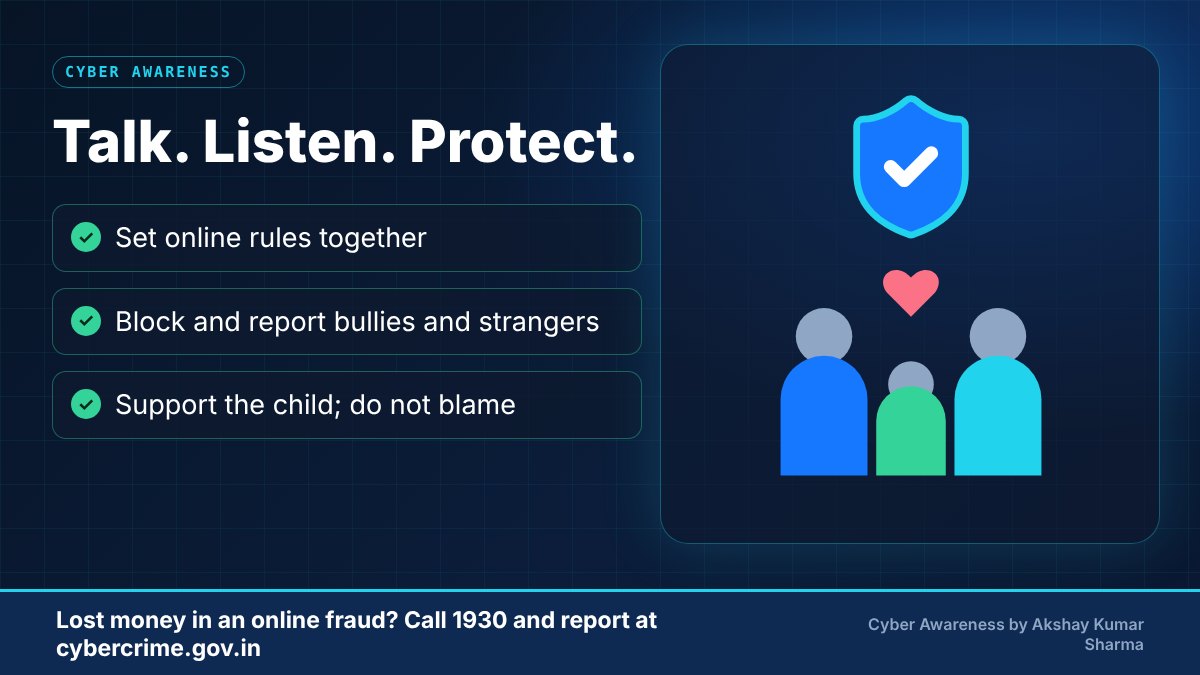
- Talk openly and make it clear that anyone can come to you without fear of blame if something feels wrong.
- Use strong passwords, two-factor authentication and parental or privacy controls that suit the child's age.
- Teach the basics: do not share OTPs, do not click unknown links, do not meet online contacts alone.
- Keep devices and apps updated, and restrict payment methods on children's accounts.
- Help elders set up payment alerts and agree to check with the family before any unusual payment.
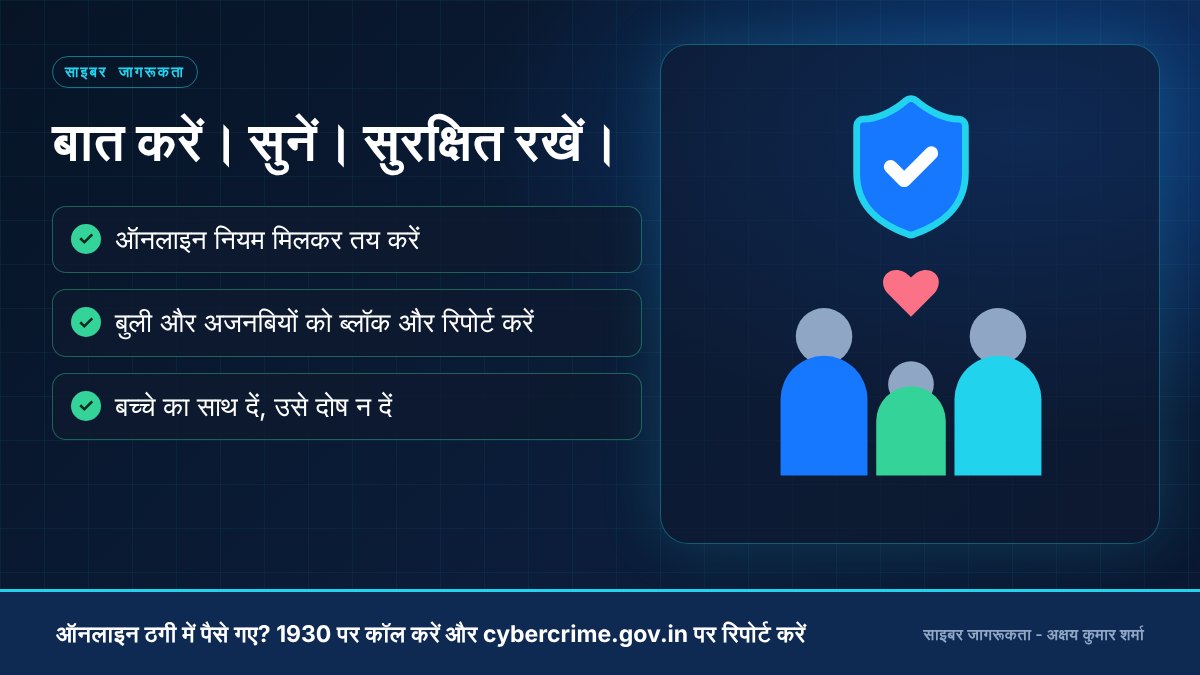
- खुलकर बात करें और भरोसा दिलाएँ कि कुछ गलत लगे तो बिना डाँट के डर के कोई भी आपके पास आ सकता है।
- मज़बूत पासवर्ड, टू-फ़ैक्टर ऑथेंटिकेशन और बच्चे की उम्र के अनुसार पैरेंटल या प्राइवेसी कंट्रोल इस्तेमाल करें।
- बुनियादी बातें सिखाएँ: OTP साझा न करें, अनजान लिंक न खोलें, ऑनलाइन संपर्क से अकेले न मिलें।
- डिवाइस और ऐप अपडेट रखें और बच्चों के अकाउंट पर भुगतान के विकल्प सीमित रखें।
- बुज़ुर्गों के लिए पेमेंट अलर्ट चालू करवाएँ और असामान्य भुगतान से पहले परिवार से पूछने की आदत डालें।
-
Scold a child for reporting a problemसमस्या बताने पर बच्चे को डाँटनाStay calm, listen and supportशांत रहकर सुनना और साथ देना
-
Share passwords with friendsदोस्तों को पासवर्ड बतानाShare them only with parents or guardiansसिर्फ़ माता-पिता या अभिभावक को बताना
-
Chat with strangers in online gamesऑनलाइन गेम में अजनबियों से चैट करनाPlay with friends you know in real lifeउन दोस्तों के साथ खेलना जिन्हें आप असल में जानते हैं
-
Hide cyberbullying out of fear or shameडर या शर्म से साइबरबुलिंग छिपानाSave the evidence, block and reportसबूत रखना, ब्लॉक करना और रिपोर्ट करना
What to do if it happensऐसा हो जाए तो क्या करें
- Stay calm and support the person. Do not blame them.
- Keep screenshots and messages as evidence, then block and report the account on the platform.
- Report serious harassment or fraud at cybercrime.gov.in and call 1930 for financial fraud.
- Involve the school or college if the issue involves classmates.
- शांत रहें और संबंधित व्यक्ति का साथ दें। उन्हें दोष न दें।
- स्क्रीनशॉट और संदेश सबूत के रूप में रखें, फिर प्लेटफ़ॉर्म पर अकाउंट ब्लॉक और रिपोर्ट करें।
- गंभीर उत्पीड़न या ठगी की रिपोर्ट cybercrime.gov.in पर करें और वित्तीय ठगी के लिए 1930 पर कॉल करें।
- यदि मामला सहपाठियों से जुड़ा है तो स्कूल या कॉलेज को शामिल करें।
Official reporting resourcesआधिकारिक रिपोर्टिंग संसाधन
- National Cyber Crime Reporting Portal (cybercrime.gov.in)राष्ट्रीय साइबर अपराध रिपोर्टिंग पोर्टल (cybercrime.gov.in) (opens in a new tab)
- Cyber crime helpline 1930 (for financial cyber fraud)साइबर अपराध हेल्पलाइन 1930 (वित्तीय साइबर ठगी के लिए)
- CERT-In (Indian Computer Emergency Response Team)CERT-In (भारतीय कंप्यूटर आपातकालीन प्रतिक्रिया दल) (opens in a new tab)
Related educational articlesसंबंधित शैक्षिक लेख
Digital Footprint and Privacyडिजिटल फ़ुटप्रिंट और प्राइवेसी
Read guideगाइड पढ़ेंSocial Media Securityसोशल मीडिया सुरक्षा
Read guideगाइड पढ़ेंOnline Job and Investment Scamsऑनलाइन नौकरी और निवेश ठगी
Read guideगाइड पढ़ेंThis website is an educational resource. It is not an official government reporting portal or an emergency response service. If you are a victim of cyber fraud, report it through the official channels listed on each page.यह वेबसाइट केवल शैक्षिक जानकारी के लिए है। यह कोई सरकारी रिपोर्टिंग पोर्टल या आपातकालीन सेवा नहीं है। यदि आप साइबर ठगी का शिकार हुए हैं, तो हर पेज पर दिए गए आधिकारिक माध्यमों से रिपोर्ट करें।