Download this guide with its diagrams as a PDF.इस गाइड को चित्रों सहित PDF में डाउनलोड करें।
What it isयह क्या है
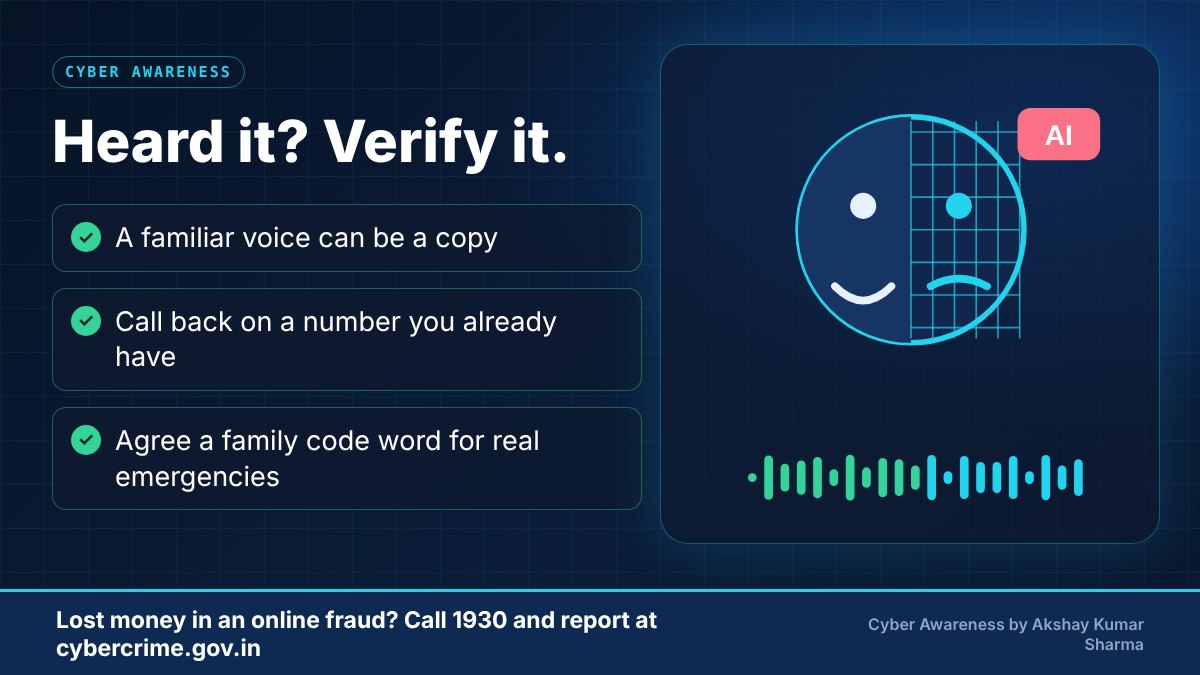
AI tools make it easier to copy someone's voice, create realistic fake videos, and write convincing messages in any language. A scammer may call in what sounds like a relative asking for urgent money, or share a fake video of a public figure promoting an investment. The technology is new, but the trick is old: trust plus urgency.
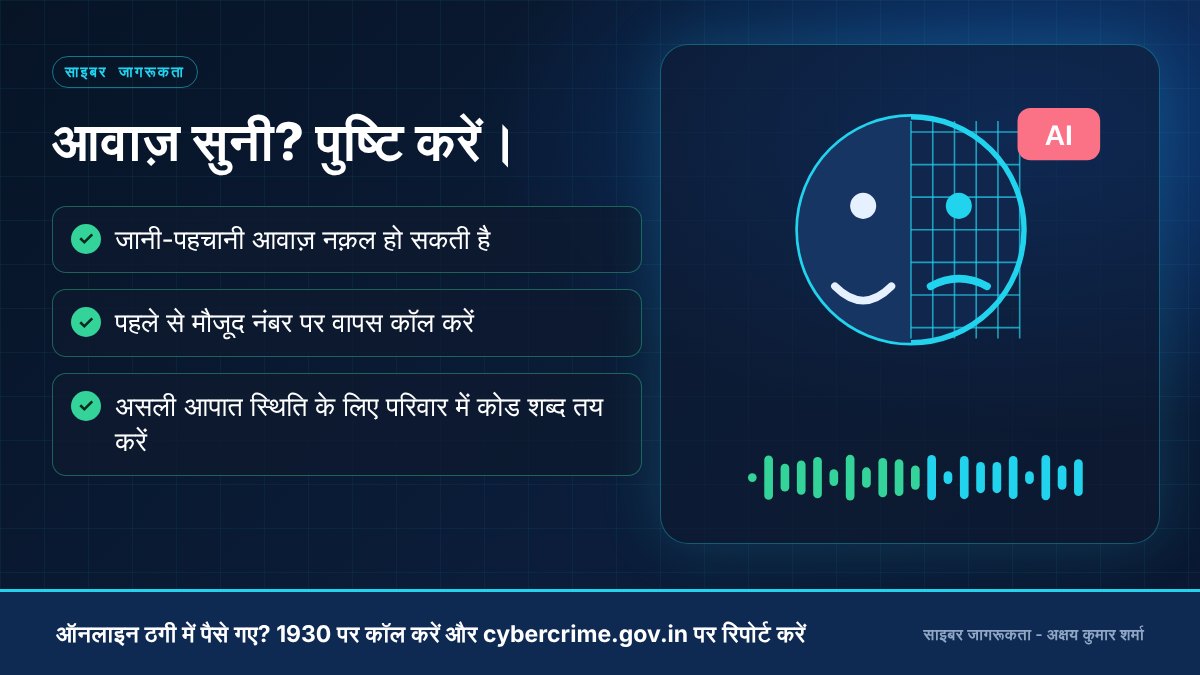
AI टूल से किसी की आवाज़ की नकल करना, असली जैसे नकली वीडियो बनाना और किसी भी भाषा में विश्वसनीय संदेश लिखना आसान हो गया है। ठग किसी रिश्तेदार जैसी आवाज़ में आपातकालीन पैसे माँगते हुए कॉल कर सकता है, या किसी जानी-मानी हस्ती का नकली वीडियो दिखाकर निवेश का प्रचार कर सकता है। तकनीक नई है, पर तरीका वही पुराना है: भरोसा और जल्दबाज़ी।
-
Scammers collect voice clips, photos and videos from the internetठग इंटरनेट से आवाज़, फ़ोटो और वीडियो इकट्ठा करते हैंStop hereयहीं रोकें: Keep your public voice and video limited.सार्वजनिक आवाज़ और वीडियो सीमित रखें।
-
AI copies the voice or face (a deepfake)AI आवाज़ या चेहरे की नक़ल बना देता है (डीपफ़ेक)
-
You get a call or video: 'a relative is in trouble' or 'your boss needs money'आपको कॉल या वीडियो आता है: 'रिश्तेदार मुसीबत में है' या 'बॉस को पैसे चाहिए'Stop hereयहीं रोकें: Verify by calling the person on a number you already have.व्यक्ति को उसके पहले से मौजूद नंबर पर कॉल करके पुष्टि करें।
-
You send money in a panicआप घबराहट में पैसे भेज देते हैंStop hereयहीं रोकें: Pause. Agree a family code word for real emergencies.रुकें। असली आपात स्थिति के लिए परिवार में एक कोड शब्द तय करें।
-
The real person never made that callअसली व्यक्ति ने वह कॉल की ही नहीं थी
Common warning signsआम चेतावनी के संकेत
- An urgent call or voice note from a 'relative' or 'friend' asking for money, from a new number.
- A video or audio of a famous person endorsing a scheme or giveaway.
- Messages that are perfectly written but ask for unusual actions or payments.
- Video calls where the person's face or lip movement looks slightly off, or the call quality is conveniently poor.
- Pressure not to verify through other means.
- नए नंबर से 'रिश्तेदार' या 'दोस्त' का अचानक पैसे माँगने वाला कॉल या वॉइस नोट।
- किसी मशहूर व्यक्ति का किसी स्कीम या गिवअवे का प्रचार करता वीडियो या ऑडियो।
- बिल्कुल सही लिखे संदेश जो असामान्य काम या भुगतान माँगते हैं।
- वीडियो कॉल जिसमें चेहरे या होंठ की हरकत थोड़ी अजीब लगे, या कॉल की क्वालिटी सुविधाजनक रूप से ख़राब हो।
- दूसरे माध्यम से जाँच न करने का दबाव।
Practical prevention tipsबचाव के व्यावहारिक सुझाव
- Agree on a family 'safe word' or ask a question only the real person could answer.
- Hang up and call the person back on their known number before sending money.
- Be careful with investment promotions featuring celebrities. Verify through official channels.
- Limit public voice and video samples, and keep social profiles private.
- Treat urgency as a warning sign, regardless of how real the voice or face seems.
- परिवार में कोई 'सेफ़ वर्ड' तय करें या ऐसा सवाल पूछें जिसका जवाब सिर्फ़ असली व्यक्ति जानता हो।
- पैसे भेजने से पहले कॉल काटकर उस व्यक्ति के पुराने, ज्ञात नंबर पर फ़ोन करें।
- मशहूर हस्तियों वाले निवेश प्रचार से सावधान रहें और आधिकारिक माध्यम से जाँचें।
- सार्वजनिक रूप से आवाज़ और वीडियो के नमूने कम रखें और सोशल प्रोफ़ाइल निजी रखें।
- आवाज़ या चेहरा कितना भी असली लगे, जल्दबाज़ी को चेतावनी का संकेत मानें।
-
Trust a familiar voice on its ownसिर्फ़ जानी-पहचानी आवाज़ पर भरोसा करनाVerify through a second channelदूसरे माध्यम से पुष्टि करना
-
Send money at once for an 'emergency''इमरजेंसी' पर तुरंत पैसे भेजनाPause and call the person directlyरुककर व्यक्ति को सीधे कॉल करना
-
Believe a celebrity video that promotes an investmentनिवेश का प्रचार करने वाले सेलिब्रिटी वीडियो पर यकीन करनाCheck the official channels of that person or companyउस व्यक्ति या कंपनी के आधिकारिक चैनल जाँचना
-
Upload your photos to unknown AI appsअनजान AI ऐप में अपनी फ़ोटो अपलोड करनाUse trusted apps and read their privacy termsभरोसेमंद ऐप इस्तेमाल करना और प्राइवेसी शर्तें पढ़ना
What to do if it happensऐसा हो जाए तो क्या करें
- Stop all payments and verify using another channel.
- Report the call, message or fake profile on the platform and to Sanchar Saathi if it came by phone.
- Call the cyber crime helpline 1930 immediately - reporting quickly gives the best chance of stopping the transfer.
- Also file a complaint on the National Cyber Crime Reporting Portal (cybercrime.gov.in).
- Inform your bank or payment app right away and ask them to block the card, account or UPI ID involved.
- Keep screenshots, transaction IDs, phone numbers, UPI IDs and chat history. Do not delete anything.
- Change passwords of affected accounts and do not share OTPs or PINs with anyone who calls you afterwards offering to 'recover' your money.
- सभी भुगतान रोकें और दूसरे माध्यम से जाँच करें।
- कॉल, संदेश या नकली प्रोफ़ाइल की रिपोर्ट प्लेटफ़ॉर्म पर करें, और फ़ोन से आया हो तो संचार साथी पर भी।
- तुरंत साइबर अपराध हेल्पलाइन 1930 पर कॉल करें - जल्दी रिपोर्ट करने से पैसा रोके जाने की संभावना बेहतर होती है।
- राष्ट्रीय साइबर अपराध रिपोर्टिंग पोर्टल (cybercrime.gov.in) पर भी शिकायत दर्ज करें।
- अपने बैंक या पेमेंट ऐप को तुरंत सूचित करें और संबंधित कार्ड, खाता या UPI ID ब्लॉक करवाएँ।
- स्क्रीनशॉट, ट्रांज़ैक्शन ID, फ़ोन नंबर, UPI ID और चैट सुरक्षित रखें। कुछ भी डिलीट न करें।
- प्रभावित खातों के पासवर्ड बदलें, और बाद में पैसे 'वापस दिलाने' का दावा करने वाले किसी भी व्यक्ति को OTP या PIN न दें।
Official reporting resourcesआधिकारिक रिपोर्टिंग संसाधन
- National Cyber Crime Reporting Portal (cybercrime.gov.in)राष्ट्रीय साइबर अपराध रिपोर्टिंग पोर्टल (cybercrime.gov.in) (opens in a new tab)
- Cyber crime helpline 1930 (for financial cyber fraud)साइबर अपराध हेल्पलाइन 1930 (वित्तीय साइबर ठगी के लिए)
- Sanchar Saathi - report suspected fraud calls/messages (Chakshu)संचार साथी - संदिग्ध धोखाधड़ी कॉल/संदेश की रिपोर्ट (चक्षु) (opens in a new tab)
- CERT-In (Indian Computer Emergency Response Team)CERT-In (भारतीय कंप्यूटर आपातकालीन प्रतिक्रिया दल) (opens in a new tab)
Related educational articlesसंबंधित शैक्षिक लेख
OTP and Social EngineeringOTP और सोशल इंजीनियरिंग
Read guideगाइड पढ़ेंSocial Media Securityसोशल मीडिया सुरक्षा
Read guideगाइड पढ़ेंUPI and Payment Fraud AwarenessUPI और पेमेंट धोखाधड़ी जागरूकता
Read guideगाइड पढ़ेंThis website is an educational resource. It is not an official government reporting portal or an emergency response service. If you are a victim of cyber fraud, report it through the official channels listed on each page.यह वेबसाइट केवल शैक्षिक जानकारी के लिए है। यह कोई सरकारी रिपोर्टिंग पोर्टल या आपातकालीन सेवा नहीं है। यदि आप साइबर ठगी का शिकार हुए हैं, तो हर पेज पर दिए गए आधिकारिक माध्यमों से रिपोर्ट करें।