Download this guide with its diagrams as a PDF.इस गाइड को चित्रों सहित PDF में डाउनलोड करें।
What it isयह क्या है
These scams promise easy money: a part-time job for a few minutes a day, rewards for liking videos, or investments with assured high returns. They often begin on messaging apps or social media. Victims are first shown small 'profits' to build trust, then pushed to deposit larger and larger amounts that they cannot withdraw.
ये ठगियाँ आसान कमाई का वादा करती हैं: रोज़ कुछ मिनट का पार्ट-टाइम काम, वीडियो लाइक करने पर इनाम, या पक्के ऊँचे रिटर्न वाला निवेश। ये अक्सर मैसेजिंग ऐप या सोशल मीडिया से शुरू होती हैं। पहले छोटा 'मुनाफ़ा' दिखाकर भरोसा जीता जाता है, फिर बड़ी-बड़ी रकम जमा करवाई जाती है जिसे निकाला नहीं जा सकता।
-
An attractive job or investment offer arrives on WhatsApp, Telegram or social mediaWhatsApp, Telegram या सोशल मीडिया पर आकर्षक नौकरी या निवेश का ऑफ़र आता हैStop hereयहीं रोकें: Genuine employers do not hire through random chats.असली नियोक्ता यूँ ही चैट से भर्ती नहीं करते।
-
A small task or small profit is shown to win trustभरोसा जीतने के लिए छोटा काम या छोटा मुनाफ़ा दिखाया जाता है
-
You are asked to pay a fee or a bigger depositआपसे फ़ीस या बड़ी रकम जमा करने को कहा जाता हैStop hereयहीं रोकें: Never pay to get a job. Pause before sending any money.नौकरी पाने के लिए कभी पैसे न दें। पैसे भेजने से पहले रुकें।
-
A fake dashboard shows growing profitनकली डैशबोर्ड बढ़ता मुनाफ़ा दिखाता हैStop hereयहीं रोकें: A screenshot of profit is not proof. Check that the firm is registered.मुनाफ़े का स्क्रीनशॉट सबूत नहीं है। जाँचें कि कंपनी पंजीकृत है।
-
Withdrawal is blocked, more 'charges' are demanded, then silenceनिकासी रोकी जाती है, और 'चार्ज' माँगे जाते हैं, फिर चुप्पीStop hereयहीं रोकें: Stop paying. Save the evidence and report it.पैसे देना बंद करें। सबूत सुरक्षित रखें और रिपोर्ट करें।
Common warning signsआम चेतावनी के संकेत
- Job offers from unknown numbers on WhatsApp or Telegram, with high pay for very simple tasks.
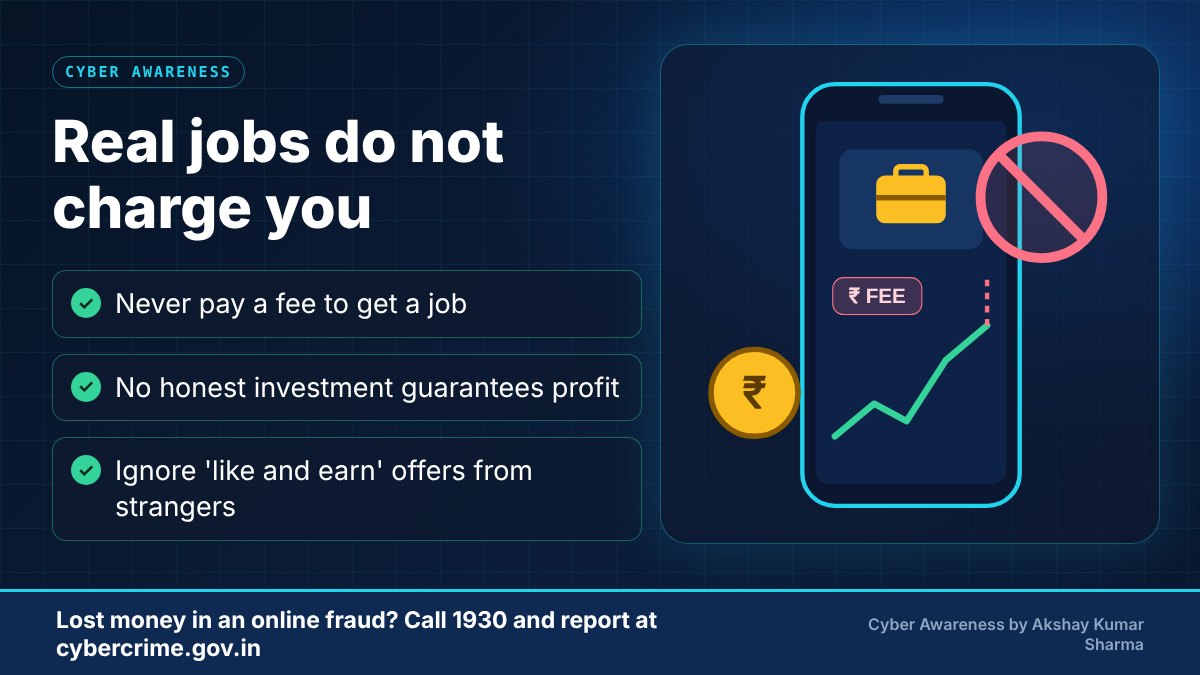
- You are asked to pay a 'registration', 'security' or 'processing' fee before you can work or withdraw.
- Guaranteed or unusually high returns with little or no risk.
- Pressure to deposit more to 'unlock' earlier profits.
- No verifiable company details, or an unregulated platform or app link sent in a chat.
- WhatsApp या Telegram पर अनजान नंबर से नौकरी का ऑफ़र, बहुत आसान काम के लिए ऊँची कमाई।
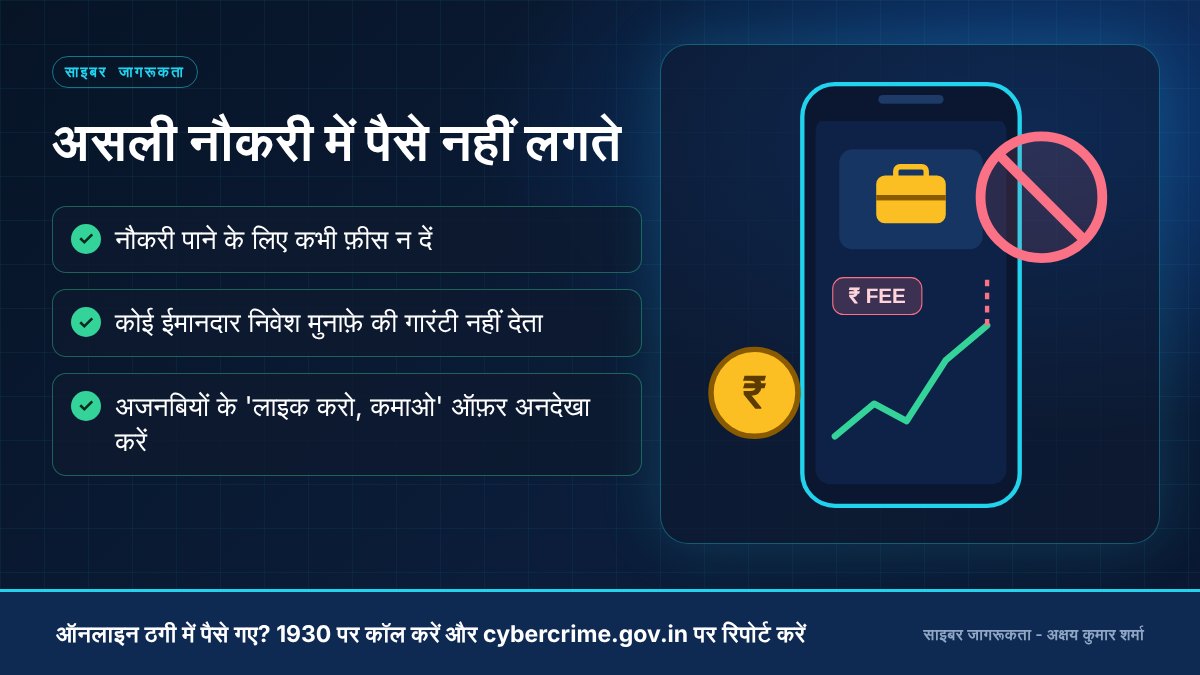
- काम शुरू करने या पैसे निकालने से पहले 'रजिस्ट्रेशन', 'सिक्योरिटी' या 'प्रोसेसिंग' फ़ीस माँगना।
- बहुत कम या बिना जोखिम के पक्का या असामान्य रूप से ऊँचा रिटर्न।
- पहले का मुनाफ़ा 'अनलॉक' करने के लिए और जमा करने का दबाव।
- कंपनी की कोई जाँच-योग्य जानकारी नहीं, या चैट में भेजा गया अनियंत्रित प्लेटफ़ॉर्म या ऐप लिंक।
Practical prevention tipsबचाव के व्यावहारिक सुझाव
- A genuine employer does not charge you to give you a job. Verify the company on its official website.
- Treat 'guaranteed returns' as a red flag. Check that an investment firm or advisor is registered with the relevant regulator.
- Do not join investment groups or install apps shared by strangers.
- Never make payments to personal accounts for jobs or investments.
- Discuss any big financial decision with someone you trust before paying.
- असली नियोक्ता नौकरी देने के लिए पैसे नहीं लेता। कंपनी को उसकी आधिकारिक वेबसाइट पर जाँचें।
- 'पक्के रिटर्न' को खतरे की घंटी मानें। जाँचें कि निवेश संस्था या सलाहकार संबंधित नियामक के पास पंजीकृत है या नहीं।
- अजनबियों द्वारा जोड़े गए निवेश ग्रुप में शामिल न हों और उनके भेजे ऐप इंस्टॉल न करें।
- नौकरी या निवेश के लिए किसी निजी खाते में भुगतान न करें।
- बड़ा आर्थिक फ़ैसला लेने से पहले किसी भरोसेमंद व्यक्ति से सलाह लें।
-
Pay a 'registration fee' for a jobनौकरी के लिए 'रजिस्ट्रेशन फ़ीस' देनाRemember: real jobs do not charge candidatesयाद रखें: असली नौकरी में उम्मीदवार से पैसे नहीं लिए जाते
-
Trust 'guaranteed' high returns'गारंटीड' ऊँचे रिटर्न पर भरोसा करनाKnow that no honest investment guarantees profitसमझें कि कोई ईमानदार निवेश मुनाफ़े की गारंटी नहीं देता
-
Join 'tips' groups run by unknown numbersअनजान नंबरों के 'टिप्स' ग्रुप में जुड़नाUse only registered, regulated intermediariesसिर्फ़ पंजीकृत और विनियमित मध्यस्थों का उपयोग करना
-
Do 'like and earn' tasks offered by strangersअजनबियों के 'लाइक करो, कमाओ' काम करनाIgnore part-time task offers from unknown peopleअनजान लोगों के पार्ट-टाइम काम के ऑफ़र अनदेखा करना
What to do if it happensऐसा हो जाए तो क्या करें
- Stop sending money, even if you are promised that the next payment will release your funds.
- Call the cyber crime helpline 1930 immediately - reporting quickly gives the best chance of stopping the transfer.
- Also file a complaint on the National Cyber Crime Reporting Portal (cybercrime.gov.in).
- Inform your bank or payment app right away and ask them to block the card, account or UPI ID involved.
- Keep screenshots, transaction IDs, phone numbers, UPI IDs and chat history. Do not delete anything.
- Change passwords of affected accounts and do not share OTPs or PINs with anyone who calls you afterwards offering to 'recover' your money.
- पैसे भेजना तुरंत बंद करें, भले ही कहा जाए कि अगला भुगतान आपकी रकम 'रिलीज़' करा देगा।
- तुरंत साइबर अपराध हेल्पलाइन 1930 पर कॉल करें - जल्दी रिपोर्ट करने से पैसा रोके जाने की संभावना बेहतर होती है।
- राष्ट्रीय साइबर अपराध रिपोर्टिंग पोर्टल (cybercrime.gov.in) पर भी शिकायत दर्ज करें।
- अपने बैंक या पेमेंट ऐप को तुरंत सूचित करें और संबंधित कार्ड, खाता या UPI ID ब्लॉक करवाएँ।
- स्क्रीनशॉट, ट्रांज़ैक्शन ID, फ़ोन नंबर, UPI ID और चैट सुरक्षित रखें। कुछ भी डिलीट न करें।
- प्रभावित खातों के पासवर्ड बदलें, और बाद में पैसे 'वापस दिलाने' का दावा करने वाले किसी भी व्यक्ति को OTP या PIN न दें।
Official reporting resourcesआधिकारिक रिपोर्टिंग संसाधन
- Cyber crime helpline 1930 (for financial cyber fraud)साइबर अपराध हेल्पलाइन 1930 (वित्तीय साइबर ठगी के लिए)
- National Cyber Crime Reporting Portal (cybercrime.gov.in)राष्ट्रीय साइबर अपराध रिपोर्टिंग पोर्टल (cybercrime.gov.in) (opens in a new tab)
- Reserve Bank of India - public awarenessभारतीय रिज़र्व बैंक - जन जागरूकता (opens in a new tab)
Related educational articlesसंबंधित शैक्षिक लेख
UPI and Payment Fraud AwarenessUPI और पेमेंट धोखाधड़ी जागरूकता
Read guideगाइड पढ़ेंSocial Media Securityसोशल मीडिया सुरक्षा
Read guideगाइड पढ़ेंAI-Based ScamsAI आधारित ठगी
Read guideगाइड पढ़ेंThis website is an educational resource. It is not an official government reporting portal or an emergency response service. If you are a victim of cyber fraud, report it through the official channels listed on each page.यह वेबसाइट केवल शैक्षिक जानकारी के लिए है। यह कोई सरकारी रिपोर्टिंग पोर्टल या आपातकालीन सेवा नहीं है। यदि आप साइबर ठगी का शिकार हुए हैं, तो हर पेज पर दिए गए आधिकारिक माध्यमों से रिपोर्ट करें।